~5 min
Unique Identity vs Legal Identity
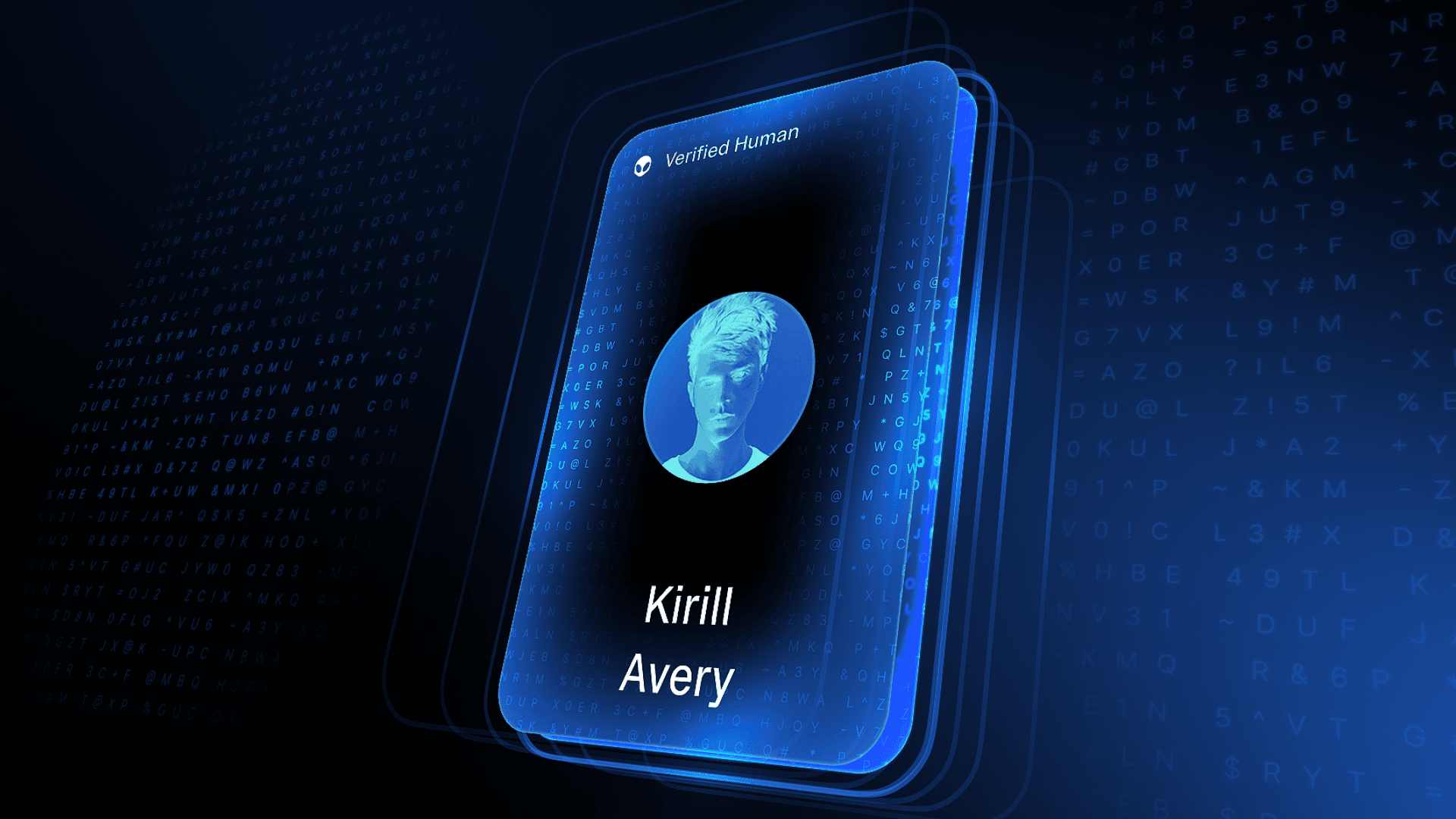
As AI kills trust online, distinguishing people from machines becomes vital. Recent discussions around Britain’s digital ID, Australia’s under-16s social media ban and India’s Sanchar Saathi app highlight the pressing need for digital systems that can verify personhood without surveillance, while using cryptography to protect both our digital activity and our identity.
Legal identity is an administrative record that can be forged or duplicated. Unique identity is the cryptographic proof that a person is a single, real human being. In the age of AI-generated content and bot attacks, only unique identity provides reliable verification.
Solutions like Alien ID focus on verifying that a user is a unique person without exposing their legal identity. Many assume it is just another Know Your Customer (KYC) system, a misconception that obscures the fundamental differences between a person’s unique identity and their legal identity. Understanding these differences is essential, because the technologies we adopt today will shape whether our identity systems protect privacy or enable surveillance.
What is Legal Identity?
A legal identity is a government-recognized identity, the documentation that connects you to your official records. It’s typically a passport, driver’s license or national ID card and includes your name and date of birth.
KYC processes exist to verify your legal identity for regulatory compliance. Any regulated institution or business uses KYC to ensure that customers match their government-issued documents, primarily to comply with anti-money laundering and counter-terrorism financing regulations.
The process usually compares a person's live image with their government-issued document, verifying both liveness and authenticity, which establishes a connection between a face, a legal name and a government record. But KYC primarily serves regulators, not users: the process exists to comply with regulations requiring financial institutions to verify customer identities.
The Vulnerabilities of KYC
Traditional KYC systems operate with an accepted error rate of approximately 2%. This means that out of 100 people opening new bank accounts, two manage to open accounts using fraudulent or borrowed identities. This error rate exists across financial institutions and has been tolerated because the immediate risk is relatively low: when someone opens a bank account, there's typically no money in it yet, limiting the incentive for fraud.
AI has exposed and amplified critical weaknesses in both components of KYC verification. Deepfake technology can now create convincing fake identities that bypass facial liveness detection, which verifies that a real person is physically present during verification rather than a photo or video. ID liveness detection verifies that the identity document itself is physically present rather than a photo or screen display. Yet documents can be forged — whether physical forgeries or AI-generated digital documents — and can pass both facial and ID liveness checks, especially as generative AI makes forgery increasingly sophisticated and accessible.
Deloitte's Center for Financial Services predicts that generative AI could enable fraud losses to reach $40 billion in the United States by 2027, up from $12.3 billion in 2023. The fundamental issue is that KYC systems rely on comparing images and documents, tasks that AI excels at replicating. Even when liveness detection confirms a real person is present and their face matches an identity document, nothing prevents the document itself from being fake.
What is Unique Identity?
Unique identity ensures that each digital account is controlled by a distinct human being, without revealing their legal identity. It doesn’t link to government records or collect personal data in centralized databases, instead it uses cryptographic proofs to confirm both humanness and uniqueness, preventing Sybil attacks and fake accounts while preserving privacy. The system verifies that you’re a real, unique human, not who you are.
The Alien Network establishes unique identity through its Continuous Human Verification Protocol (CHVP). CHVP combines biometrics, age-based groupings and social-graph relationships. Each verification is chained cryptographically and processed inside MPC-based trusted execution environments, ensuring data remains hidden even during computation. The result is verifiable, privacy-preserving unique identity: the network proves you are a unique human while keeping your legal identity and personal information private. This approach reflects how Alien proves personhood without storing data, allowing verification to occur without creating centralized databases of personal information.
Why Unique Identity is Important
The 2% error rate that financial institutions accept for regulatory compliance would multiply exponentially when legal identity is repurposed as unique identity for authorization and access control. When opening a bank account, fraudsters gain access to minimal immediate reward, but when identity grants access to existing value — financial assets, voting rights or authenticated profiles — the incentive to attack the system increases dramatically. The market demand for fraudulent identities would surge, and the technical limitations that produce that 2% error — document forgery and biometric spoofing — would be exploited at scale. Legal identity systems were designed for regulatory checkpoints — opening accounts and crossing borders — not for ongoing verification in daily digital interactions.
Many platforms now collect legal identity verification despite having no regulatory obligation to do so. LinkedIn, for instance, requires government documents and legal names for verification badges — ostensibly to prevent bots — despite having no KYC requirements. The platform only needs to verify humanness and uniqueness, yet collects sensitive personal data anyway. This pattern reveals how legal identity verification has become a wrapper for data collection rather than a solution to the actual problem of distinguishing humans from bots.
The explosion of AI-generated content and AI agents makes unique identity increasingly urgent. Traditional KYC, rooted in government documents, cannot address the challenges of the AI age: passports and ID cards were designed for regulation and compliance, not for preventing Sybil attacks, verifying humanness online, or distinguishing people from autonomous agents.
Unique identity enables new paradigms: platforms can verify humanness without collecting personal data, networks can confirm uniqueness without revealing identity, and systems can prove authenticity without centralized control. It enables the elimination of bots on social networks, distinguishing humans from AI agents in digital spaces, and makes possible future scenarios such as online voting and governance or universal basic income distribution. The same guarantees are essential for fair launch distribution systems, where each allocation must go to a unique human rather than a network of automated or duplicate accounts.
What’s next?
Legal identity will remain necessary for regulated activities like opening bank accounts, crossing borders and signing contracts. KYC verification serves this regulatory purpose, despite its vulnerabilities. But as AI capabilities advance and synthetic content proliferates, proving humanness becomes foundational infrastructure.
The choice isn't between legal identity and unique identity. We need both for different purposes: legal identity for regulatory compliance and unique identity for privacy-preserving participation in digital society.
The Alien Network, through Alien ID, implements unique identity with the CHVP rather than traditional KYC, enabling verification without surveillance, authentication without data collection and trust without centralized control.
Developers interested in integrating unique identity into their applications can explore the developer documentation for implementation guides, APIs and SDK resources. You can download the Alien App now to become one of the first members of the Alien Network. You can also visit Alien on X for updates and Discord to join the community.
If building trust in the age of AI feels urgent and important to you, consider joining us.

Founder of Alien
Writes about decentralized identity and proof of humanity
FAQs
Question 1?
Answer goes here
Question 2?
Answer goes here
Question 3?
Answer goes here
We raised $7.1M from Initialized, Finality and others. Read more